Where Most Bypass Setups Break Down
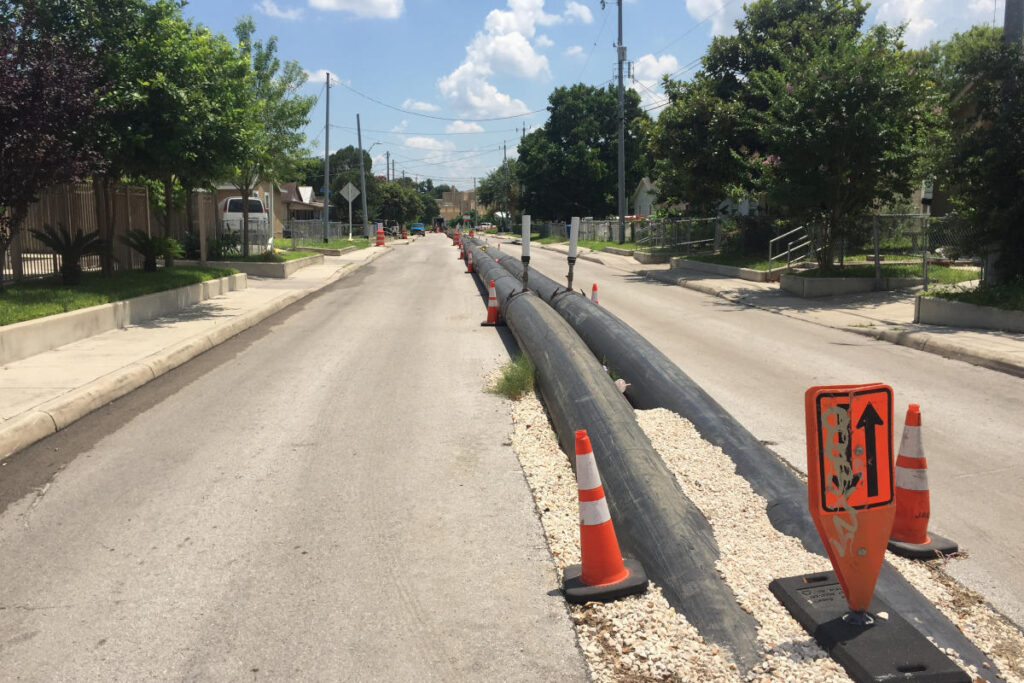
Sewer bypass is not just about moving water. It involves managing solids, pressure, and continuous flow under changing conditions.
Typical issues include:
- Incorrect flow calculations that underestimate peak demand
- Improper pipe sizing that restricts flow
- Inadequate redundancy in critical systems
- Poor suction lift management leading to cavitation
- Lack of air handling, causing vapor lock or loss of efficiency
Many providers treat bypass as a basic pump rental. Without proper engineering, these systems become unstable under real operating conditions.
How to Determine the Right
Bypass System
A properly designed sewer bypass system starts with understanding the full hydraulic profile of the line.
Key factors include:
- Peak flow rate including surge and storm conditions
- Total dynamic head (TDH), including friction loss, elevation, and discharge pressure
- Solids handling requirements for wastewater and debris
- Suction conditions, including lift and available NPSH
- Redundancy requirements for critical infrastructure
These variables determine not just the pump size, but the entire system configuration.
Recommended Pump Solutions for Sewer Bypass
Based on field conditions, sewer bypass systems typically rely on high head and extreme high head pumps.
High Head Pumps for Controlled Bypass Flow
Used in moderate pressure systems where flow must be maintained over distance with consistent performance.
Extreme High Head Pumps for Critical Operations
XH 10 x 8 and XH 12 x 8 pumps are commonly used for large-scale bypass due to their ability to maintain pressure and flow under high resistance.
These systems are often paired with:
- Properly sized piping and manifolds
- Backup pumps for redundancy
- Air release and vacuum management components
The system must be built to handle both normal flow and unexpected surges without failure.
Get a Bypass System You Can Rely On
Sewer bypass is not a place for guesswork. A properly engineered system protects infrastructure, maintains compliance, and prevents costly failures.
At PenTex, we approach bypass projects with a focus on hydraulic accuracy, system redundancy, and real-world performance. Every system is designed to operate continuously under variable conditions.
If you want to review equipment options, you can explore our product catalog to see how different pump systems perform in bypass applications.
If you are planning a bypass or dealing with an active issue, the best step is to speak directly with our team.
Reach out to PenTex to connect with an expert who can assess your system requirements and design a solution that performs under pressure.