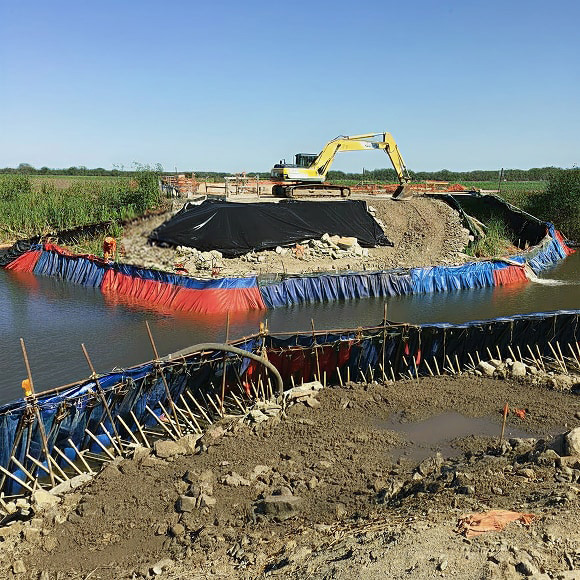
Understanding Hydraulic Requirements
Effective river diversion starts with accurate flow estimation and system design.
Key considerations include:
- Base and peak flow rates, including seasonal and storm variability
- Suction conditions, especially when drawing from open water sources
- Discharge distance and elevation, often across uneven terrain
- Debris handling capability, to prevent clogging and downtime
- System redundancy, to maintain flow during maintenance or surge events
Without accounting for peak conditions, systems risk failure during the exact moments they are needed most.
Pump Selection for River Diversion
River diversion systems require pumps that can handle high volume, variable intake conditions, and continuous operation.
High Flow Pumps for Primary Diversion
Used to move large volumes of water around work zones. Sizes from 8 inch to 24 inch are common, depending on river size and flow requirements.
Medium Head Pumps for Supplemental Control
Super 6 inch and 10 by 8 pumps are often used to support secondary flow paths or manage localized water accumulation.
High Head Pumps for Distance and Terrain
Required when diverted water must travel long distances or navigate elevation changes across the site.
Pump selection must also consider priming capability and the ability to maintain performance with fluctuating suction conditions.
System Configuration in Open Environments
River diversion systems rely heavily on proper configuration to maintain stability.
Critical elements include:
- Intake protection such as screens to manage debris
- Proper hose and pipe sizing to maintain flow rates
- Anchoring and stabilization to prevent movement under pressure
- Backup systems to handle unexpected increases in flow
Because conditions can change quickly, systems must be designed with flexibility and margin
Maintain Control in Uncontrolled Conditions
River diversion is about managing uncertainty. The goal is not just to redirect water, but to maintain consistent control under changing conditions.
At PenTex, diversion systems are designed with real-world variability in mind. We focus on capacity, reliability, and adaptability to ensure performance across all flow conditions.
If you are planning a diversion, you can review our product catalog to understand available pump configurations.
For active projects or complex environments, the most effective step is to work directly with our team. We will assess flow conditions, site layout, and risk factors to design a system that performs when conditions change.
Reach out to PenTex to connect with an expert and ensure your diversion system is built to handle real conditions.